
The industrial program is divided by thematics into 4 sessions. Detailed program will be updated in the ConfTool and here. Each presentation is 20min long (15+5min for questions.) Full program to be released in the end of March 2025.
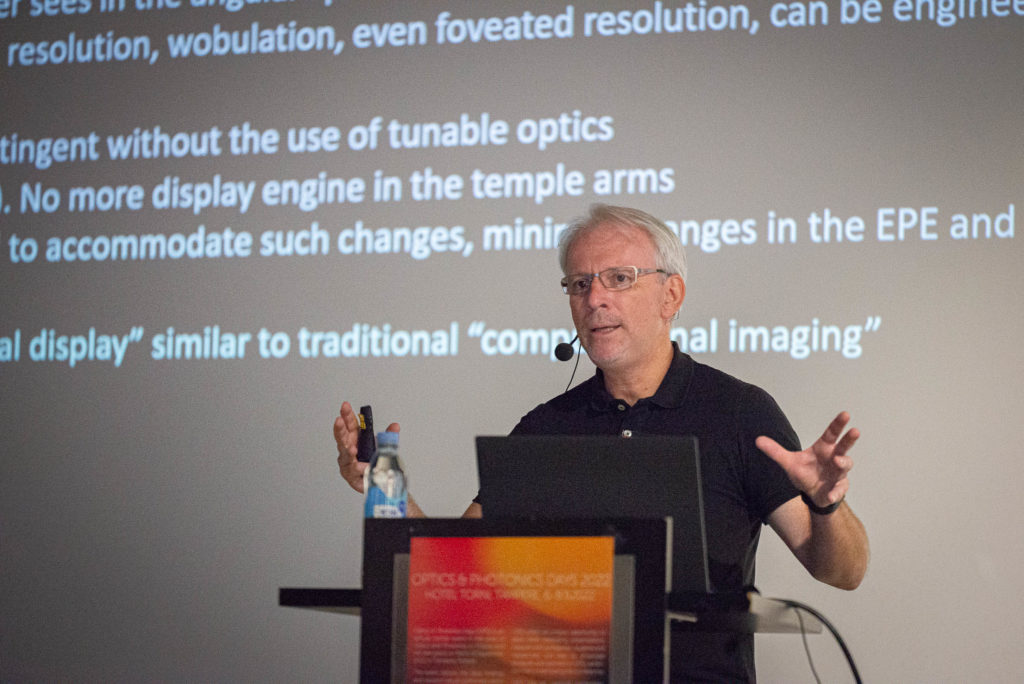
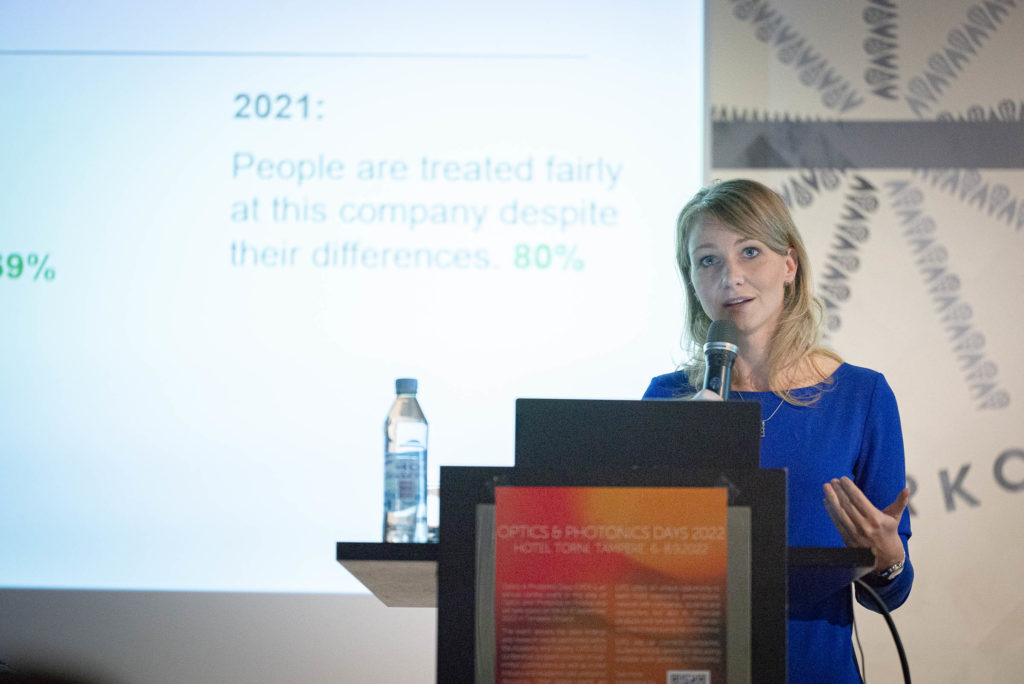
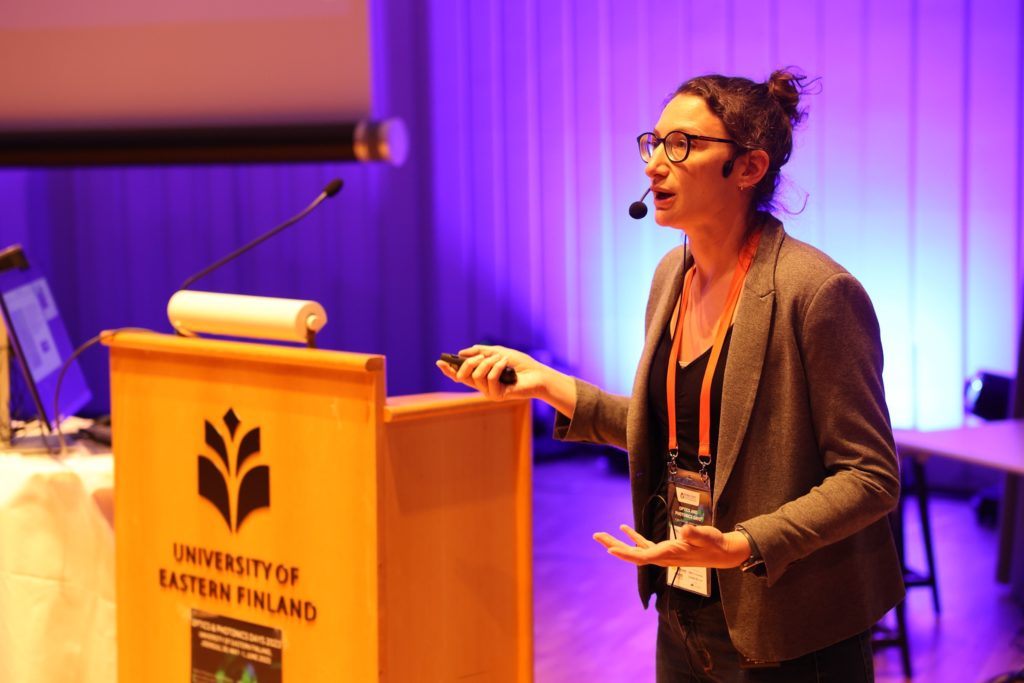
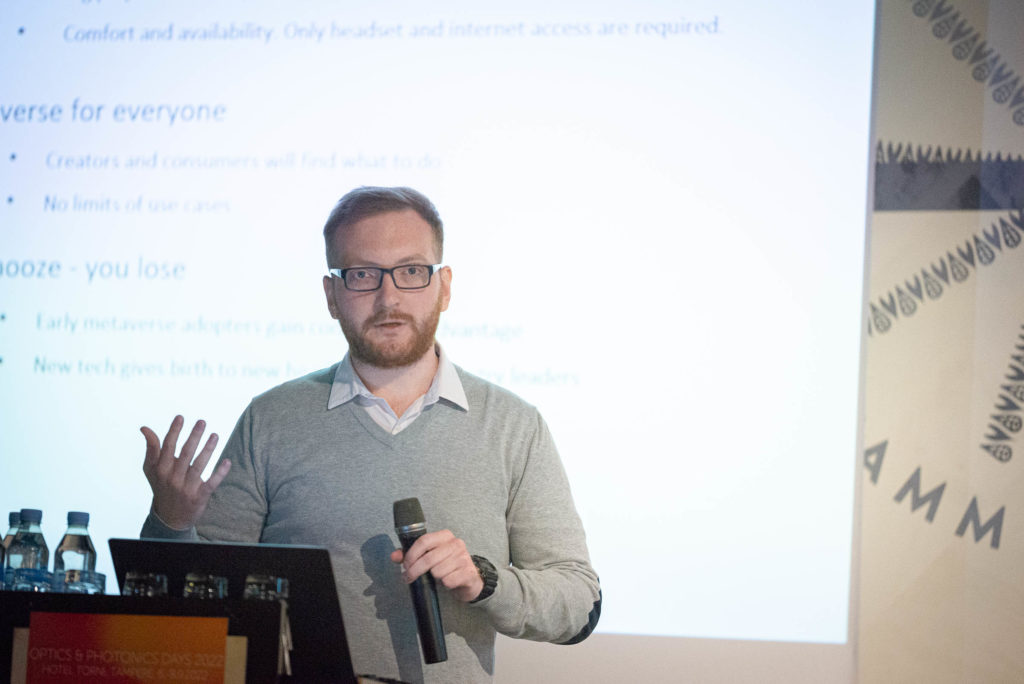
OPD2026 Industry topics
- Photonics in Augmented Reality
- PICs & Quantum Photonics
- Photonics for Dual-Use Applications
- Optical Measurements & AI for Industry
Session: Photonics for Dual-Use Applications
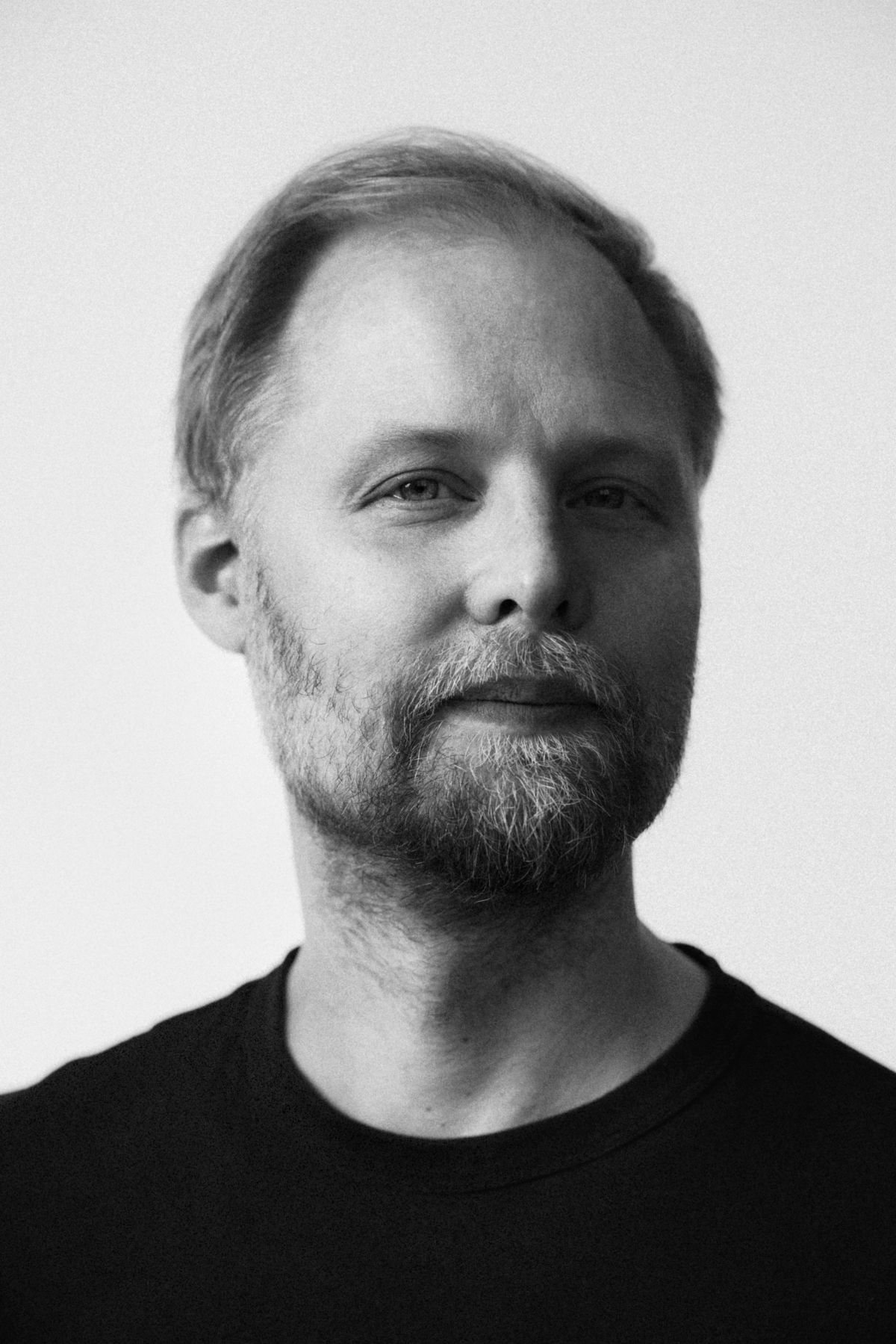
Fighter Jet grade HUD Technologies for Land Systems, Urho Konttori, CEO, Distance Technologies

Urho Konttori is the founder of XR companies Varjo and Distance Technologies. Before that, he played a key role at Nokia and Microsoft, where he helped build both mobile phone and VR/AR products—working across hardware, core technologies such as cameras, and even operating systems. An inventor at heart, Urho is listed on dozens of patents and is widely recognized as one of the pioneers shaping the future of extended reality.
Distance Technologies has invented computational optics based mirrorless HUD systems and is bringing them to automotive and defence markets. Distance is also productizing in the defence a head worn field operator HUD, a see-through overlay enhancing especially the mounted soldiers on the battlefield.

Cooled Infrared Detectors – Manufacturing challenges and advances, Clive Arthurs, Engineering Product Manager, Leonardo S.p.A.

Clive Arthurs joined the infrared detector business at Leonardo in 1990. An electronics engineer by training he has undertaken a variety of roles including the design of readout integrated circuits for focal plane arrays, the design of test systems, and developed demonstration cameras. He is a technical consultant and provides mentoring and governance to project teams. He is particularly focused on ensuring customers receive detectors that will meet their overall system requirements.
Leonardo is a global industrial group established in Italy in 1948 with technical capability in Aerospace, Defence & Security. The Southampton UK facility is a Centre of Excellence for the design, development and manufacture of Infrared Detectors, with capability in IR sensitive semi-conductor crystal growth, array fabrication, design of Read-Out Integrated Circuits, Dewar manufacture and detector assembly and test. Applications for Leonardo’s cooled detectors include both civil and military markets such as thermal imaging and long range surveillance, search-and-track systems, situational awareness and protection, spectral analysis, astronomy and earth sciences.
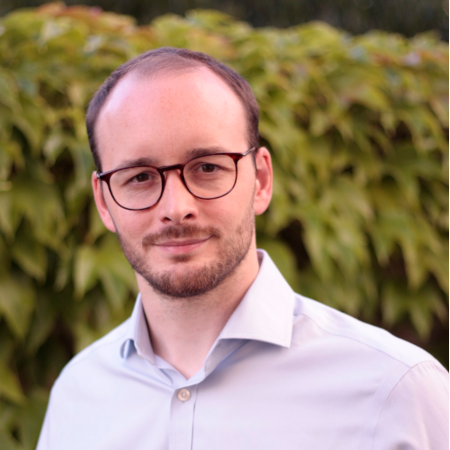
Multi-Spectral Optronics for Counter-UAS: From Reconnaissance to Rapid Target Engagement, Dr. Philip Klement, Systems Engineer, Hensoldt

Dr. Klement specializes in advanced optronic systems for demanding applications in harsh environments. He combines expertise in optical spectroscopy, materials science, and thin-film technology to develop integrated multi-sensor solutions within interdisciplinary teams.
HENSOLDT is a global high-tech pioneer for defence and security electronics and a market leader in civilian and military sensor solutions.
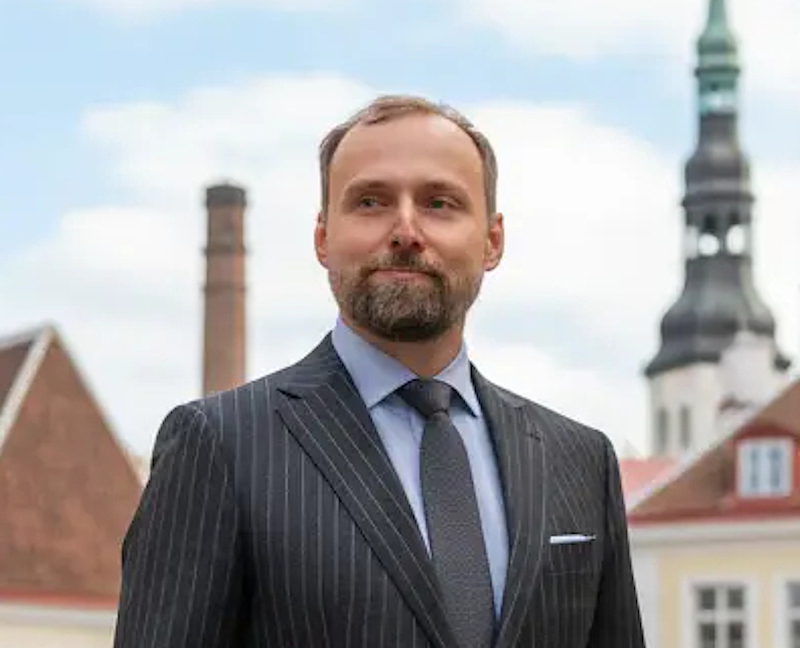
Optical high frequency profiling in difficult environments, Toomas Pruuden, CEO, Marduk.

CEO of Marduk Technologies, research and development of machine learning based tracking systems. Marduk Technologies – Estonian company developing optical UAS detection and tracking systems.
Session: Photonics in Augmented Reality
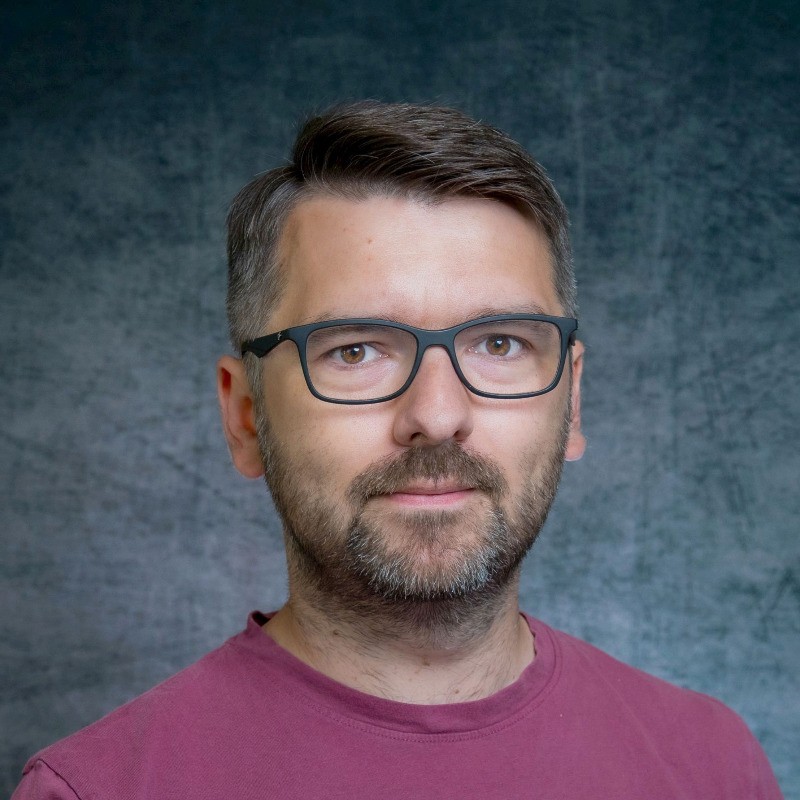
How do you make an AR display? Maksim Shpak, Principal Optical Engineer, Anduril Industries

A short overview of display technologies available for AR products, from the point of view of application requirements, performance and manufacturability.
Maksim has 6 years of experience working on AR waveguides, and a D.Sc. in optical metrology. Maksim is currently leading an Optical Engineering team at Anduril Industries.
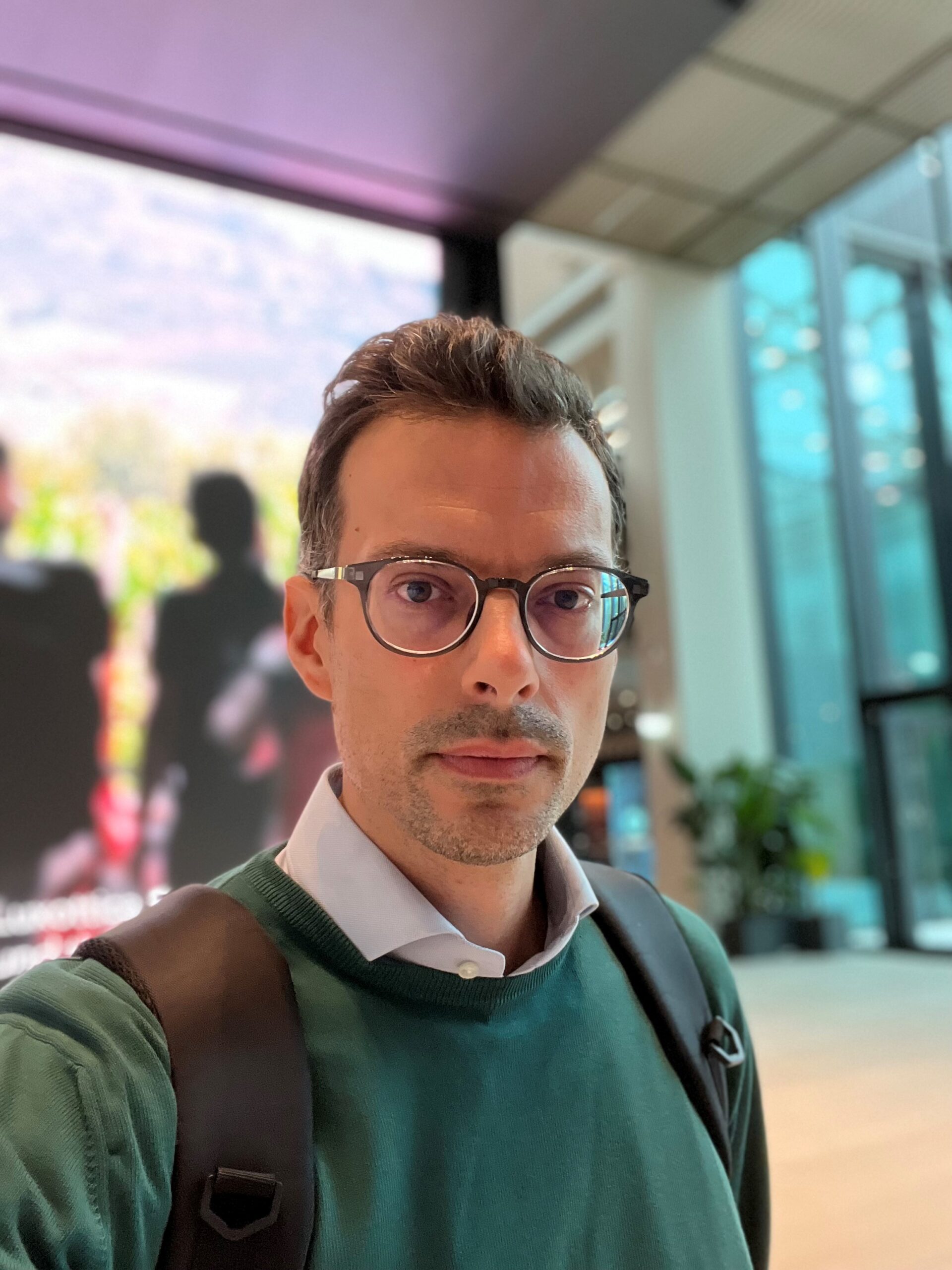
Personalized Eyewear Technologies for Seamless AI Integration, Marco Galiazzo, Applied Materials

Marco Galiazzo is a Process Support Engineering Director specializing in advanced optical technologies and manufacturing. He leads the development and industrialization of electrochromic devices, smart lenses, and AR components, bridging R&D and scalable production. He is recognized for translating complex optical designs into robust, manufacturable solutions.
This presentation covers Applied Materials’ PPB developments, showcasing their etched waveguide display technology for next-generation smart glasses — highlighting breakthroughs in lightweight, rainbow-free, high-brightness optics and personalized eyewear form factors. It also details their strategic manufacturing partnership and a technology roadmap aimed at making AR/AI-powered glasses mainstream through invisible, scalable, and consumer-ready photonics.
Applied Materials is the leader in materials engineering solutions that are at the foundation of virtually every new semiconductor and advanced display in the world. The technology Applied Materials creates is essential to advancing AI and accelerating the commercialization of next-generation chips. The company pushes the boundaries of science and engineering to deliver material innovation that changes the world.

Advancing AR waveguide optics with high‑refractive‑index polymer substrates, Sesha Manuguri, PhD.

Sesha Manuguri, PhD, is a specialist in soft‑matter chemistry and nanofabrication, with a research background focused on developing and manufacturing advanced optical materials for augmented reality applications. Since joining Dispelix in 2024, Sesha has been a key contributor in advancing Dispelix’s polymer waveguide technology and product development.
The talk focuses on Dispelix’s latest advancements in AR waveguide technology, with particular emphasis on novel high–refractive‑index polymer substrates and their integration into the design and manufacturing of next‑generation waveguides.
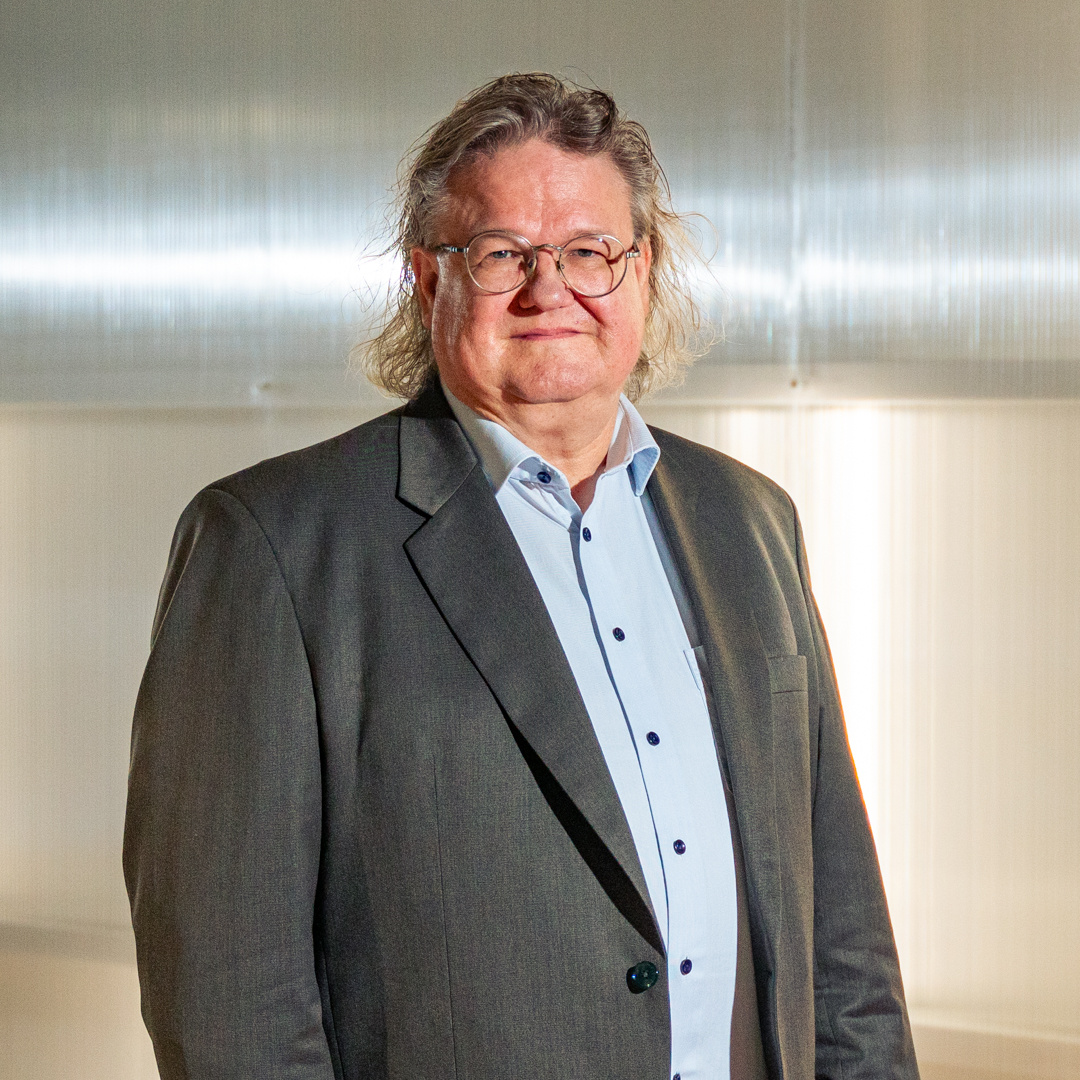
OpenAR: Affordable AR-glasses with open hardware and software, Professor Jyrki Saarinen, Head of the Center for Photonics Sciences, University of Eastern Finland
Professor Jyrki Saarinen is the head of the Department of Physics and Mathematics at the University of Eastern Finland and the Photonics Research Center, focusing on the applications and commercialisation of photonics. With over 30 years of experience, Jyrki has deep business development and management expertise, ranging from startups to large international companies.
Jyrki Saarinen is the co-founder and former CEO of Heptagon and has also served as a founding member and chairman of the Photonics Finland network. In addition, Saarinen has held leadership roles in numerous significant projects and initiatives, both internationally and domestically.
OpenAR is an open access project hailing from the University of Eastern Finland. The aim of the project is to build cheap, hobbyist friendly augmented reality glasses, and then share everything about them to everyone. OpenAR-M is the latest, more compact version of the mainline OpenAR glasses. The total price varies between 30 – 150€ and this variance is mainly due to the electronic parts.
Session: PICs & Quantum Photonics
Vexlum’s laser solutions for quantum applications, Dr. Tommi Hakulinen, Vexlum.
Dr. Tommi Hakulinen is a senior product management and sales professional with two decades of experience across diverse technologies and markets. Currently, he’s holding the position of Director, Sales & Marketing at Vexlum, specializing in high-power single-frequency lasers for Quantum Technology and semiconductor metrology applications.
Vexlum is a deep-tech company specializing in high-power semiconductor laser systems based on its proprietary Vertical-External-Cavity Surface-Emitting Laser (VECSEL) technology. Spun out from Tampere University in Finland, Vexlum develops and manufactures cutting-edge lasers that offer unmatched performance in terms of system size, laser power, and cost for demanding applications in quantum technology, medicine, scientific research, and the semiconductor industry.
Peter Van Arkel, PhotonDelta

PhotonDelta is a non-profit organisation supporting an end-to-end value chain for photonic chips that designs, develops, and manufactures innovative solutions that contribute to a better world – by creating global awareness and promoting the benefits and potential of the Dutch and European photonic chip industry and its technologies. Leveraging funding from the National Growth Fund, alongside strategic investments, PhotonDelta catalyses the acceleration of the photonic chip industry.
Towards production-ready photonic technology platforms, Lasse Karvonen, Department Director at imec
Lasse Karvonen is the optics and photonics expert with over 15 years work experience on the field. He is currently working as department director at imec and before that at Microsoft on Mixed/augmented reality display and optical data storage topics. His work has always been in the intersection of light and nanotechnology.
This presentation gives an overview of imec’s silicon photonics capabilities, the core building blocks of the platforms, and the application domains they enable. It highlights how imec’s R&D is translated into accessible, industry-ready offerings through IC-Link, with a focus on currently available platform capabilities and an outlook to what is coming next.
Imec is the world’s leading independent nanoelectronics R&D hub. The combination of our talent, infrastructure, and partner network enables breakthroughs towards microchips that are smaller, faster, more affordable, and more sustainable. We combine that nanotech expertise with data and AI to create and support applications for a smarter, better future.
Decoupling Wavelength from Hardware: A New Architecture for Optical Communication, Nick Volet, Co-Founder and Chief Scientific Officer of QVersion and Associate Professor of Photonics at Aarhus University.

Nick Volet is Co-Founder and Chief Scientific Officer of QVersion and Associate Professor of Photonics at Aarhus University. He works at the interface of nonlinear integrated photonics, semiconductor lasers, and chip-scale light generation, translating photonics research into deployable technologies for communication, sensing, and quantum applications.
QVersion develops chip-scale wavelength-conversion technologies that extend optical systems beyond the limits of standard telecom wavelengths. By enabling signals to be generated with mature photonic components and translated into propagation- or sensing-optimized wavelength bands, QVersion supports new architectures for quantum photonics, free-space optical communication, and mid-infrared sensing.
Session: Optical Measurements & AI for Industry

Non-contact Laser Vibrometry for industrial applications, Kim Grundström, CEO,Kimmy Photonics
Kim Grundström is an entrepreneur since 1990 with as strong background in photonics and laser applications with roots in laser surgery R&D and product development followed by product management and marketing & sales.
His career evolved into distribution of non-contact metrology solutions mainly based upon light and laser technologies both for scientific and research areas but also, for industrial applications and especially were conventional methods no longer is enough to meet the needed requirements of today.
Multi-Chip-LEDs and broadband LEDs as specific light sources in various applications, Antje Thamm, VP Sales & Marketing, EPIGAP OSA Photonics GmbH

Using more than one LED wavelength for illumination can often improve measurement accuracy because accompanying signals and reference channels are utilized. The presentation provides insights into the design of multi-chip assemblies with a focus on multispectral imaging of SWIR LEDs compared to alternative approach with broadband illumination.
After studying materials science and holding various positions as an applications engineer, Antje Thamm started working in the photonics industry more than 20 years ago in sales for LEDs and photodiodes with customers in the field of industrial sensor technology. At EPIGAP OSA Photonics GmbH she focuses on implementing customer-specific projects involving the development and manufacturing of everything from LED chips to LED modules for a wide range of applications, such as laser scanner systems for industrial metrology, encoders and hyperspectral imaging illumination and light barriers.

Use and limitations of AI in real time industral process monitoring & product quality inspection with machine vision, M.Sc. Jussi Lindgren, Technology manager responsible of imaging based measurements at Valmet.

M.Sc. Jussi Lindgren graduated from University of Jyväskylä at 1999, from areas of physics, paper technology, computer sciences and mathematics. Since then he has gained 25+ years professional experience on area of machine vision, covering almost all aspects of that wide umbrella.
From 2015 onwards he has worked in Valmet Automation’s Quality Management Systems product group as a role of Technology manager responsible of imaging based measurements (Previously, from 2005 in Metso Automation and Viconsys with same products).
This presentation explores, how AI can be used and what limitations it has in real time industral process monitoring and product quality inspection with machine vision.

Traceable quality control tools for photonics industry, Virpi Korpelainen, Senior Scientist at VTT MIKES.

Virpi Korpelainen is a Senior Scientist at VTT MIKES, working in the field of metrology. Her expertise covers interferometry, nanometrology, and measurement uncertainty, with a strong focus on traceable measurements and industrial applications.
VTT MIKES is the National Metrology Institute of Finland, responsible for maintaining SI units. VTT MIKES is providing traceability to SI units, metrology research, and calibration services to support industry, research, and society.